 ultimate-guide
San Diego Piercing: Safety, Aftercare & Same-Day Visits
Table of Contents
- What to Expect at a Professional San Diego Piercing Studio
- Professional Piercing Safety Standards You Should Verify
- Jewelry Quality: Why Implant-Grade Titanium Matters
- Same-Day Piercing Availability and Walk-In Policies
- Piercing Aftercare Instructions for a Smooth Healing Process
- Pain Management, Anxiety Reduction, and Ear Curation
- Conclusion
- Frequently Asked Questions
Last Updated: September 22, 2026
What to Expect at a Professional San Diego Piercing Studio
A professional San Diego piercing studio walks you through every step before a needle comes out of its sterile packaging. At Sandiegopiercingshops, we've performed piercings since 2002, and the process works: consultation, anatomy check, jewelry selection, and an aftercare walkthrough.
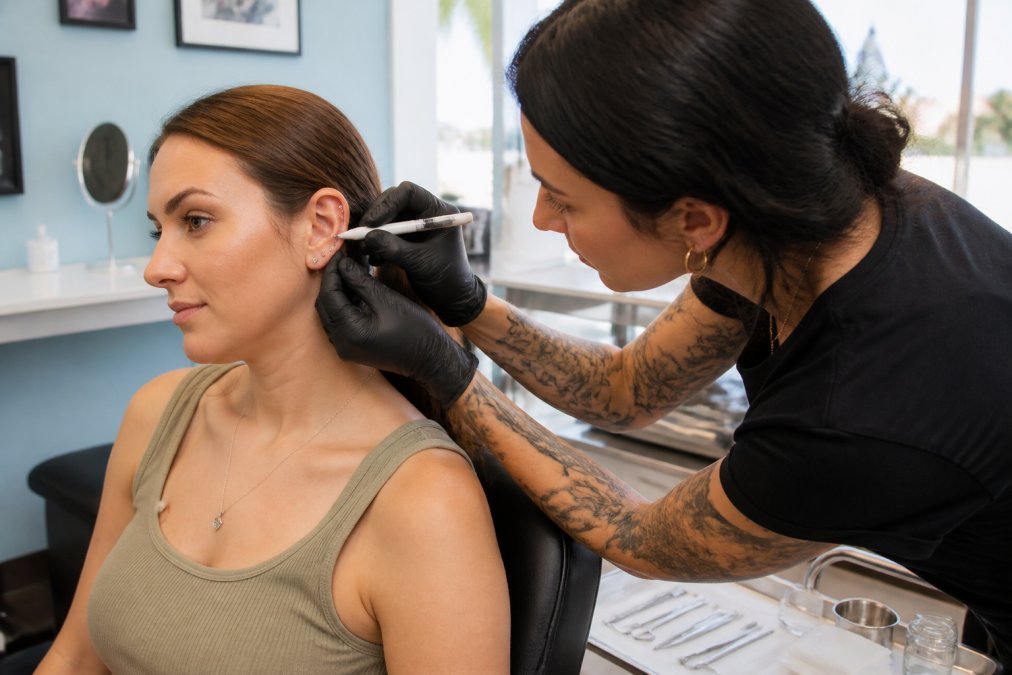
A typical visit runs in this order:
- Consultation and ID check, your piercer reviews your goals and confirms age requirements
- Anatomy assessment, ear shape, cartilage ridges, and existing piercings all affect placement
- Jewelry selection, material, gauge, and style chosen for your specific piercing
- Marking and approval, you see the placement before the needle touches skin
- The piercing itself, usually under a minute for most placements
- Aftercare walkthrough, cleaning protocol, what to avoid, and when to come back for downsizing
Professional Piercing Safety Standards You Should Verify
Safety standards are the one area where you should never take a studio's word for it. A studio that follows real protocols shows you the equipment rather than describing it. The strongest verification isn't a website badge, it's a paper trail you can inspect on the spot.
Single-Use Needles and Autoclave Sterilization
Every piercing should use a single-use needle opened from sealed, dated packaging in front of you. For reused tools like forceps, an autoclave is the standard: pressurized steam sterilization, with spore tests to confirm it works. If a studio can't tell you when their autoclave was last tested, that's your answer.
Local Health Department Compliance and Inspection Records
A studio handling open skin is a regulated body-art establishment, subject to routine health department inspections in most jurisdictions. Those reports are usually public records. Ask to see the most recent one; a clean studio hands it over without hesitation.
What to look for on an inspection report:
- Critical vs. non-critical violations, a critical violation involves actual contamination risk (improper sterilization, no handwashing sink, reuse of single-use items); non-critical items are usually paperwork or storage issues
- Date of last inspection, a recent clean report tells you more than a five-year-old perfect score
- Corrective actions, if violations were cited, was there a documented fix and a re-inspection?
- Permit posting, the establishment permit should be displayed where clients can see it, not tucked in a drawer
APP Membership and Piercer Credentials
An APP member piercer has met specific requirements for technique, sterilization, and studio setup. Membership isn't the only marker of a qualified professional, but it's verifiable. Ask about bloodborne pathogen training and first aid certification too.
Cross-Contamination Controls You Can Watch For
Watch the room for two minutes:
- Gloves changed between every task, not just between clients
- Barriers (plastic wrap, tray covers) on surfaces that get touched repeatedly
- Used needles going straight into a sharps container, never set down on a tray
- Jewelry handled with sterile gloves or sterile instruments, not bare fingers
- Handwashing sink stocked with soap and paper towels, not just hand sanitizer
Questions Worth Asking Before You Sit Down
- When was the autoclave last spore-tested, and can I see the log?
- Are needles opened in front of me from sealed packaging?
- Is the studio's health permit current and posted?
- What's your protocol if a piercing shows signs of infection?
None of these are confrontational. A professional studio expects them and answers directly.
Jewelry Quality: Why Implant-Grade Titanium Matters
Implant-grade titanium is the safest starting material for a fresh piercing because it's biocompatible: your body won't treat it as a foreign object to attack. It's lightweight, hypoallergenic, and won't react with saline.
| Material | Safe for Fresh Piercings | Best For | Notes |
|---|---|---|---|
| Implant-grade titanium | Yes | Most new piercings | Nickel-free, lightweight, biocompatible |
| Solid gold (nickel-free alloy) | Yes, with verification | Healed piercings, styling | Confirm alloy before buying |
| Surgical steel | Sometimes | Healed piercings | Quality varies; nickel content unclear |
| Sterling silver | No | Healed lobes only | Tarnishes and can stain tissue |
Same-Day Piercing Availability and Walk-In Policies
Same-day piercing availability depends on how busy the studio is when you arrive, so a quick call ahead saves a wasted trip. Walk-ins are welcome at Sandiegopiercingshops, and we fit same-day appointments whenever the schedule allows. Call or text (858) 222-0071 for availability.
Appointment booking makes sense for a few situations:
- Multiple piercings in one session, ear curation projects take planning time
- First-timers who want an unhurried visit, no rush, no pressure
- Specific piercers or jewelry, if you want a particular piece, confirm it's in stock
- Weekend and evening slots, these fill fastest
Piercing Aftercare Instructions for a Smooth Healing Process
Piercing aftercare comes down to three things: keep it clean, keep it dry, and leave it alone. Most healing problems trace back to over-cleaning or touching.
Saline Solution and Cleaning Protocol
Use a sterile saline solution from a pressurized can, sprayed on the piercing twice a day. That's it. Don't rotate the jewelry, pick at crust, or use alcohol, hydrogen peroxide, or homemade salt water, which dry out tissue and slow healing.
Healing Timelines by Piercing Type
Healing timelines vary widely by placement, and rushing causes most of the problems people blame on the piercing itself. Lobes heal fastest; cartilage piercings take considerably longer, and some placements take the better part of a year to settle.
| Piercing Type | Typical Healing Time | Downsizing Window |
|---|---|---|
| Lobe | 6-8 weeks | 4-6 weeks |
| Nostril | 2-4 months | 6-8 weeks |
| Septum | 6-8 weeks | 6-8 weeks |
| Conch | 6-12 months | 3-4 months |
| Daith | 6-12 months | 3-4 months |
| Rook | 6-12 months | 3-4 months |
Pain Management, Anxiety Reduction, and Ear Curation
Most studios treat pain and nerves as something you just get through. That's a missed opportunity: a calm, informed client heals better than a tense one who associates the piercing with a bad memory.
What Piercing Actually Feels Like, Placement by Placement
Pain is subjective, but the pattern is consistent enough to plan around:
- Lobe, a quick pinch, over in a second or two, the easiest starting point
- Helix and flat, more pressure than sharpness, cartilage is denser than lobe tissue
- Conch, deeper pressure, sometimes a dull ache for a few hours after
- Daith and rook, thicker cartilage, so the pressure lasts a beat longer
- Septum, often described as a sharp pinch with watery eyes, then it fades fast
- Nostril, a brief sting, and the eye on that side will water involuntarily
Anxiety-Reduction Techniques That Actually Help
If you're nervous, say so upfront. A good piercer adjusts rather than pushing through. What works:
- Eat a real meal an hour or two before, low blood sugar is the most common cause of lightheadedness, not the piercing itself
- Hydrate, but skip a heavy caffeine load, which amplifies jitters and raises heart rate
- Ask for a step-by-step narration, knowing what's coming next removes the surprise factor
- Bring a support person, a friend in the room is allowed at most studios and helps more than a distraction video
- Use box breathing, inhale four counts, hold four, exhale four, hold four, during the setup
- Tell your piercer if you're prone to fainting, they can position you reclined or seated safely before the needle comes out
Ear Curation Is a Planning Service, Not a Shopping Trip
Ear curation benefits most from planning, and it's where a studio's real expertise shows. A curated ear maps piercings to your specific anatomy, not a photo from Pinterest. Cartilage ridges, the curve of your daith, and the shape of your conch determine what sits correctly and heals well.
- Healing capacity matters, most people can comfortably heal two to three piercings at a time; stacking five cartilage piercings in one session is a recipe for prolonged healing and irritation
- Balance follows anatomy, a piercing that looks balanced on one ear may sit awkwardly on the other because the cartilage ridge runs differently
- Jewelry should be chosen as a set, mixing metals and styles is fine, but the proportions (gauge, diameter, gem size) need to relate to each other or the ear looks cluttered
- Plan in phases, a common approach is one or two piercings now, then a check-in and downsizing before adding the next piece
- Downsizing is part of the design, the long starter bar is temporary, and the final look depends on swapping to the correct length once swelling drops
Conclusion
A piercing that heals cleanly and looks right comes down to choosing a studio that treats safety, jewelry quality, and aftercare as one connected process. Sandiegopiercingshops has served clients since 2002 with a focus on anatomy, comfort, and long-term healing, plus curated ear designs and a large selection of quality body jewelry. Walk-ins are welcome and same-day service is often available, so call or text (858) 222-0071 for availability.
Frequently Asked Questions
How do I know a piercing studio follows proper sterilization standards?
Look for single-use needles, an autoclave with spore testing logs, and piercers who wear fresh gloves and use sterile barriers. Ask about APP membership and whether the studio uses implant-grade titanium jewelry. A reputable studio will happily show you their sterilization process and answer questions about cross-contamination prevention before you commit.
Do most professional studios accept walk-ins for same-day piercing availability?
Many professional studios welcome walk-ins, but availability depends on the day and piercer schedule. Calling ahead is the best way to confirm same-day piercing availability. Walk-ins are a convenient option for lobe piercings and simple cartilage placements, while more complex curations may benefit from a scheduled appointment so the piercer can plan placement and jewelry.
What should piercing aftercare instructions include for a new piercing?
Proper aftercare includes cleaning with a sterile saline solution twice a day, avoiding touching the jewelry with dirty hands, and keeping the area dry. Do not use alcohol, hydrogen peroxide, or antibacterial ointments unless directed. For cartilage piercings, avoid sleeping on the pierced side. Follow your piercer's specific instructions and contact them if you notice redness, swelling, or discharge that worsens.
What jewelry materials are safest for sensitive ears?
Implant-grade titanium is the safest option for sensitive ears and new piercings. These materials are hypoallergenic and biocompatible, reducing the risk of irritation and allergic reactions. Avoid mystery metals, nickel-heavy alloys, and cheap fashion jewelry until the piercing is fully healed, which can take several months depending on the location.