 how-to
Book an Expert Ear Piercing Session: 2026 Guide
Table of Contents
- Why Booking an Expert Ear Piercing Session Matters
- Ear Piercing Anatomy Assessment: Finding the Right Placement
- How to Choose High-Quality Piercing Jewelry
- What to Expect During Your Ear Piercing Session
- Professional Piercing Aftercare Instructions for Fast Healing
- How to Book Your Expert Ear Piercing Session: Step-by-Step
- Frequently Asked Questions
Last Updated: September 22, 2026
Why Booking an Expert Ear Piercing Session Matters
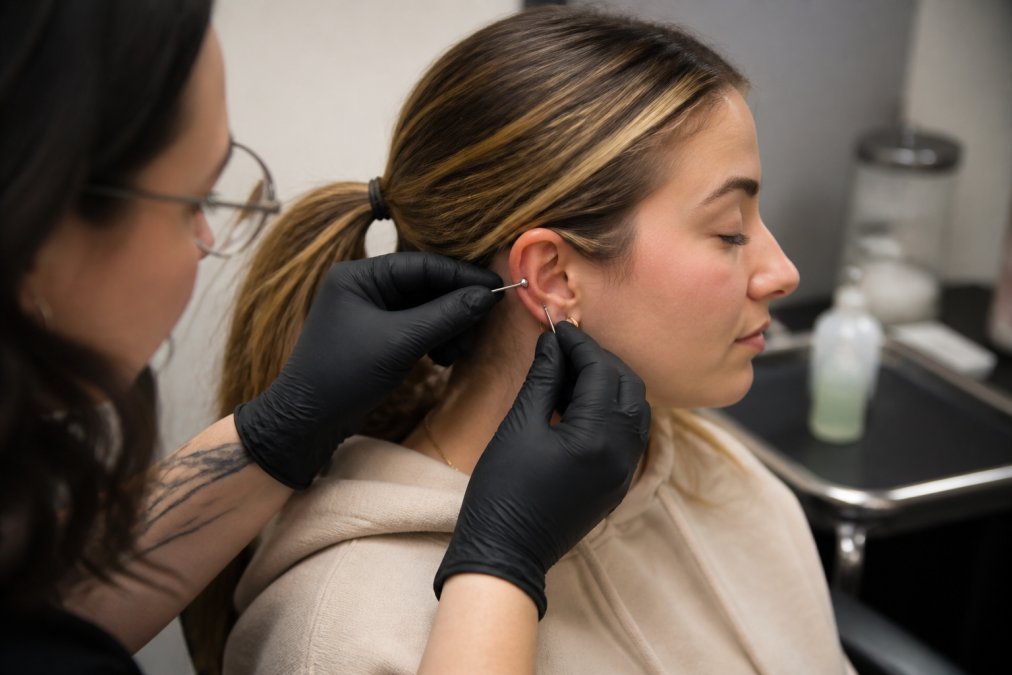
A professional ear piercing session is a sterile, anatomy-guided procedure performed by a trained piercer who selects placement, jewelry, and aftercare based on your ear structure. It is a minor body modification with real healing stakes, and the person holding the needle determines most of the outcome.
This guide from Sandiegopiercingshops breaks down how to book an expert ear piercing session, from anatomy assessment to aftercare, so you know what you are paying for.
Most guides treat piercing as a jewelry purchase with a procedure attached. The jewelry matters, but placement and technique matter more: an implant-grade titanium labret will still migrate if set at the wrong angle through thin cartilage.
The Association of Professional Piercers safety standards exist precisely because technique and sterility are not optional details. They are the whole product.
Ear Piercing Anatomy Assessment: Finding the Right Placement
An ear piercing anatomy assessment is where a professional piercer examines your cartilage thickness, folds, and curvature before choosing a placement. Skipping it is how people end up with piercings that reject, migrate, or never heal.
Not every ear can host every piercing. The piercer checks for specific structural features, and when one is missing, the piercing must be modified or declined. What is evaluated:
- Daith: needs a defined inner cartilage ridge with enough depth to hold a ring without pressing on the ear canal. A shallow or flat daith shelf is a common reason this piercing gets declined or repositioned.
- Industrial: requires a helix curl with enough height and thickness at both ends to support a single straight barbell. If the two points do not line up on a straight axis, the piercer will suggest a custom bent barbell or two separate helix piercings instead.
- Conch: sits in the bowl of the ear, and the depth of that bowl varies enormously. A shallow conch leaves the jewelry sitting proud of the surface, which increases snag risk and migration.
- Rook: needs a pronounced antihelix ridge. A soft or low ridge gives the jewelry nothing to anchor against.
- Tragus: depends on the thickness of the tragus cartilage itself. Very thin tragus tissue can make even a well-placed piercing unstable.
- Flat and helix: depend on the flat plane of the ear being wide enough that the backing does not sit on a curve. Placement on a curve is a leading cause of migration.
Why anatomy drives rejection. A piercing rejects when the body pushes the jewelry toward the surface and out. That happens when jewelry sits at an angle to the tissue, there is not enough tissue depth to hold it, or pressure from a curve keeps the channel irritated. These are placement problems, decided during the assessment.
During a proper assessment, your piercer should:
- Feel the cartilage thickness at each candidate site
- Check for existing scar tissue, keloid history, or previous piercing damage
- Photograph or mark placement so you can see it before committing
- Explain how your anatomy affects healing time and jewelry options
- Tell you plainly when a requested piercing is not suitable, and offer an alternative that is
This is where a curated ear design gets planned. If you want four or five piercings across the lobe, helix, and tragus, the piercer maps the whole layout first, since placement that looks balanced on one ear looks crowded on another. Spacing matters for healing too: two piercings too close together share blood supply and irritation, so a good layout staggers them.
A common mistake is arriving with a photo from social media and expecting an exact copy. Bring the photo, but expect the piercer to adapt it. Your anatomy is the constraint, not the reference image.
How to Choose High-Quality Piercing Jewelry
High-quality piercing jewelry is made from biocompatible materials your immune system tolerates during healing: implant-grade titanium, 18k gold, and platinum.
Your body treats the piercing channel as an open wound for weeks or months. Anything the jewelry leaches into it, whether nickel, cadmium, or cheap plating, triggers irritation or worse.
Implant-grade titanium is the standard starting choice. It is lightweight, hypoallergenic, and holds up to sterilization.
18k gold works for healed piercings and for clients who want a specific look. Lower karats often contain nickel alloys that cause reactions.
Platinum is the least reactive option and the most expensive. It is usually reserved for sensitive clients or high-end curated ear designs.
What most guides miss is the difference between "surgical steel" and implant-grade. Surgical steel is a marketing term, not a grade. It can contain nickel.
What to Expect During Your Ear Piercing Session
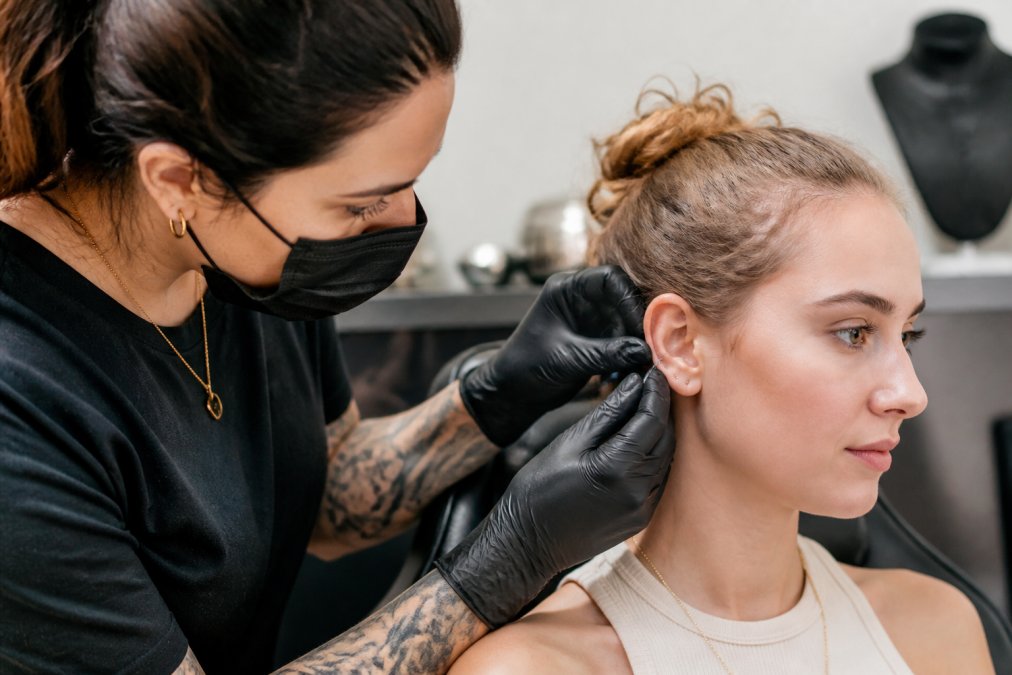
A typical ear piercing session takes 10 to 20 minutes per piercing, including setup, marking, the piercing itself, and jewelry insertion. The needle lasts a second; everything around it is what you are paying for.
Here is the sequence, start to finish:
- Consultation and ID check. The piercer confirms the placement, reviews your health history, and verifies age and consent.
- Marking. Placement is marked with a surgical pen and shown to you in a mirror. Nothing happens until you approve it.
- Sterilization. The station, tools, and jewelry are sterilized. Needles come out of sealed, single-use packaging in front of you.
- The piercing. The needle passes through in one motion. Most clients describe it as a sharp pinch lasting under two seconds.
- Jewelry insertion and check. The piercer seats the jewelry, checks the angle, and gives you a mirror.
- Aftercare walkthrough. You leave with written instructions and a way to reach the studio with questions.
Professional Piercing Aftercare Instructions for Fast Healing
Professional piercing aftercare instructions come down to three rules: clean gently, do not touch, and do not sleep on it. Most healing problems trace back to one of those being broken.
| Piercing Type | Typical Healing Time | Aftercare Focus |
|---|---|---|
| Lobe | 6-8 weeks | Gentle saline, avoid tight earrings |
| Helix / cartilage | 6-12 months | No sleeping on it, no hats rubbing it |
| Conch | 6-12 months | Keep hair and earbuds away |
| Daith | 6-12 months | Careful with earbuds and stethoscopes |
| Tragus | 6-12 months | Avoid pressure from headphones |
| Industrial | 6-12 months or longer | Two healing sites, so no pressure on either end |
| Rook | 6-12 months | Watch for pressure from the fold above it |
Things to avoid during healing:
- Touching or rotating the jewelry with unwashed hands
- Alcohol, hydrogen peroxide, or antibacterial ointments
- Swimming pools, hot tubs, and lakes for the first several weeks
- Sleeping directly on the healing side
- Tight over-ear headphones, helmets, and earbuds that press on the site
Troubleshooting: Irritation vs. Infection vs. Rejection
If you notice increasing redness, swelling, or foul-smelling discharge, contact your piercer before trying home remedies. Many problems that look like infections are actually irritation from pressure or movement, and the fix is different.
How to Book Your Expert Ear Piercing Session: Step-by-Step
Booking an expert ear piercing session takes about five minutes if you know what to ask. The goal is to confirm credentials, sterility practices, and jewelry standards before you sit in the chair.
Follow these steps:
- Check credentials. Look for a piercer with formal training and a portfolio of healed work, not just fresh photos.
- Ask about sterilization. The answer should mention an autoclave and single-use needles. If the answer is vague, move on.
- Ask what jewelry they stock. Implant-grade titanium, 18k gold, and platinum are the answers you want.
- Book a consultation if you want a curated ear design. Multi-piercing layouts need planning time, not a walk-in slot.
- Confirm walk-in versus appointment policy. Some studios take walk-ins; others book by appointment only. Ask before you drive over.
- Bring ID and, for minors, a parent or guardian. Age and consent rules apply, so check ahead.
- Eat and hydrate before your appointment. Low blood sugar is the most common reason clients feel faint.
CDC guidance on safe body piercing practices
Frequently Asked Questions
How do I find a reputable ear piercing studio?
Look for a studio that uses sterile, single-use needles, has licensed piercers, and offers implant-grade jewelry like titanium or 18k gold. Check that the studio provides a clean, dedicated piercing area and clear aftercare instructions. Reading reviews and asking about their sterilization protocols can help you choose a safe provider for your ear piercing session.
What should I look for in a professional piercer?
A professional piercer should be licensed, experienced, and focused on anatomy-specific placement. They will assess your ear shape, discuss jewelry options, and explain the healing process. They should also use an autoclave for sterilization and provide thorough aftercare instructions. Don't hesitate to ask about their training and ask to see their portfolio.
How long does an ear piercing appointment usually take?
A typical ear piercing session takes 15 to 30 minutes, including consultation, jewelry selection, and the piercing itself. More complex placements or multiple piercings may take longer. Booking an appointment in advance ensures you have dedicated time with the piercer and a calm, unrushed experience.
Is it better to get pierced with a needle or a gun?
Professional piercers use hollow needles because they are sterile, precise, and cause less tissue damage than piercing guns. Guns can force blunt jewelry through the ear, leading to more trauma and higher infection risk. For a safe ear piercing session, always choose a licensed piercer who uses single-use needles.